Start with what you own
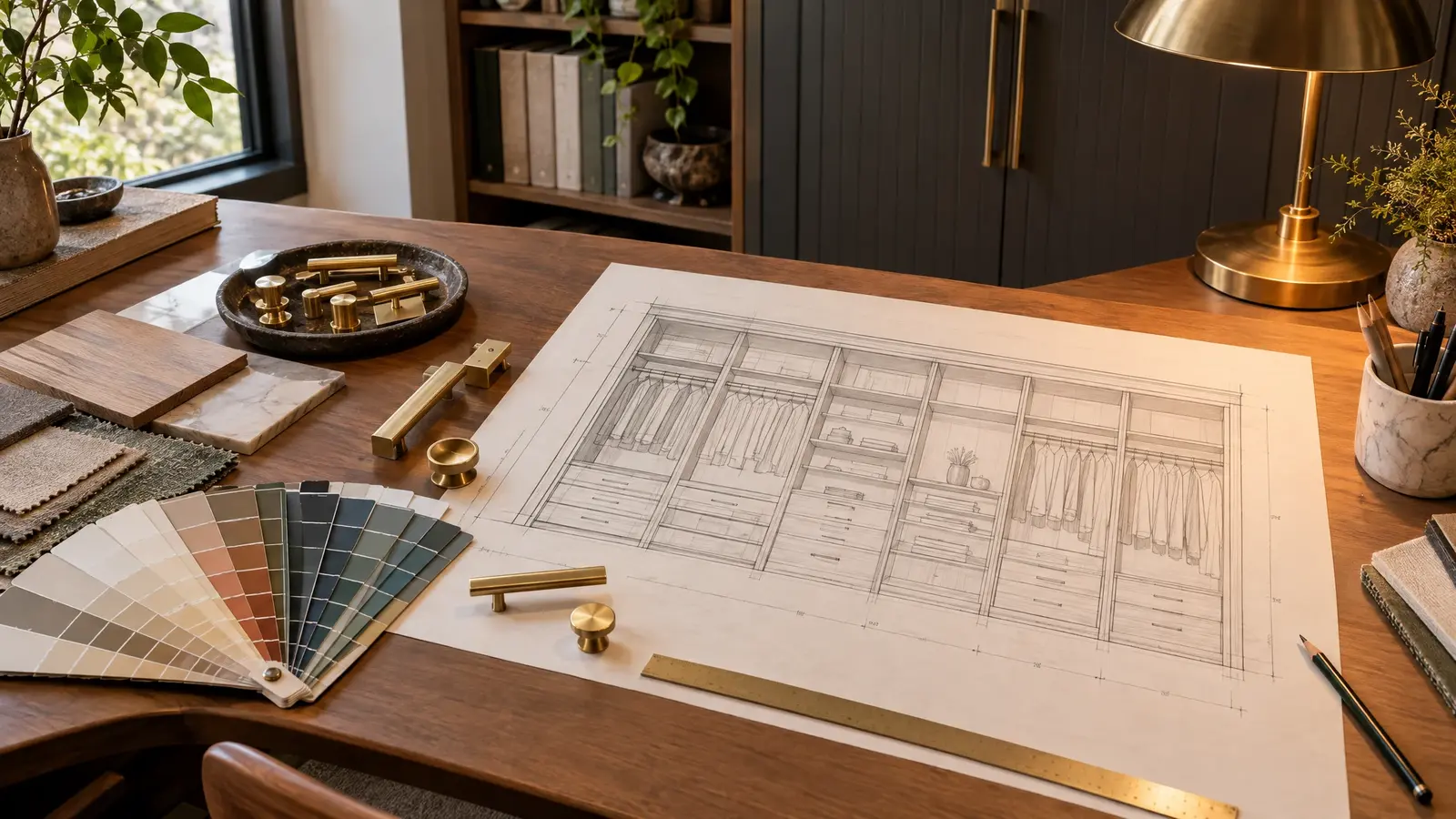
A great closet is designed around the wardrobe, not the other way around. Count how much you have in each category: short hang (shirts, folded trousers), long hang (dresses, coats), double hang, folded items, shoes, handbags and accessories. Write the numbers down. Even rough counts change the design.
Then ask how you dress. If you choose outfits the night before, you may want an island or a valet rod. If you dress in a hurry, you want everything visible at a glance.
A quick way to do this is to lay everything on a bed by category for ten minutes. Photograph the piles, and measure how much rod, shelf and drawer space each would need. That small exercise usually reveals one or two categories (often shoes or folded knits) that were quietly stealing space from everything else.
Choose a layout shape
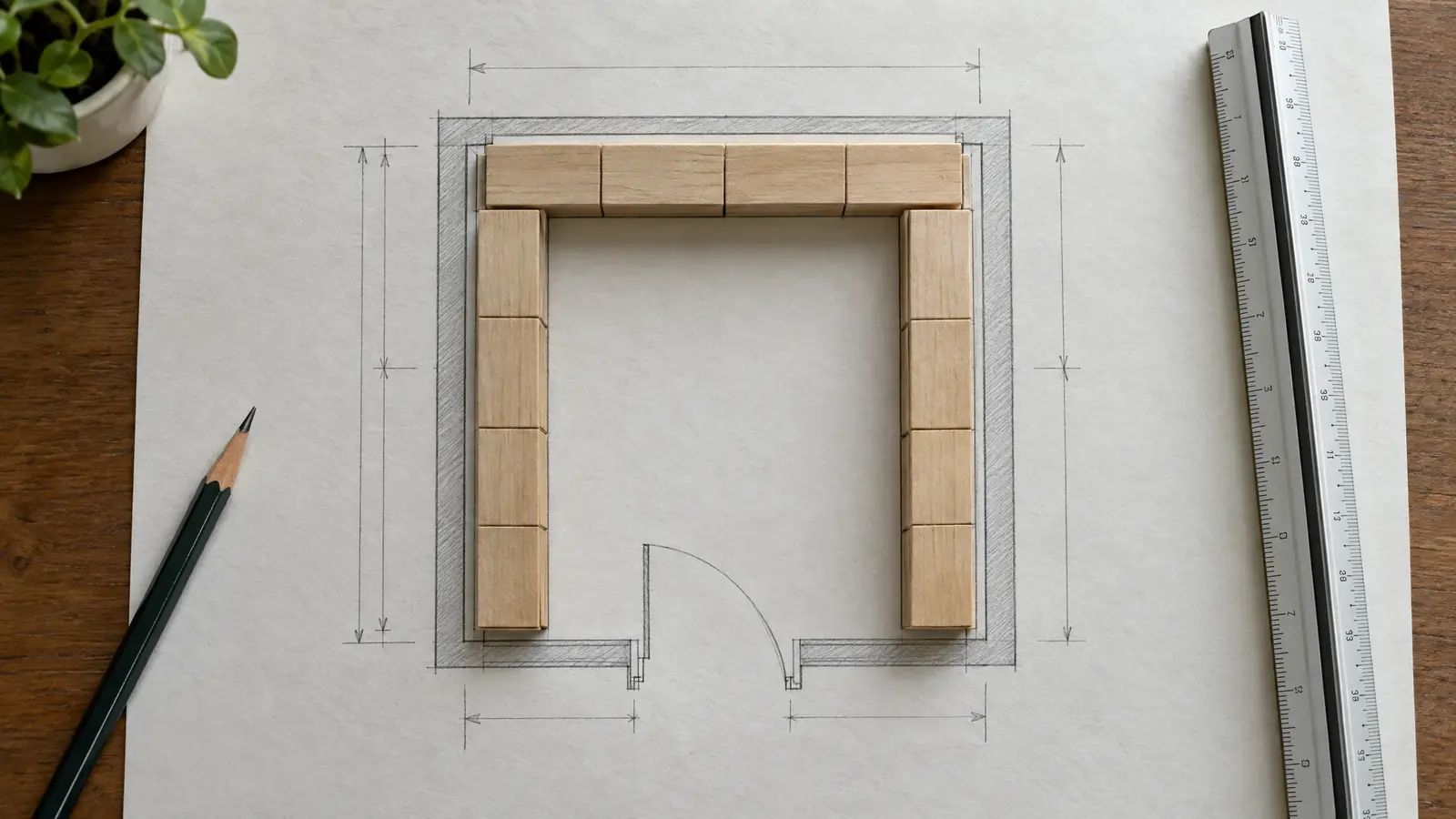
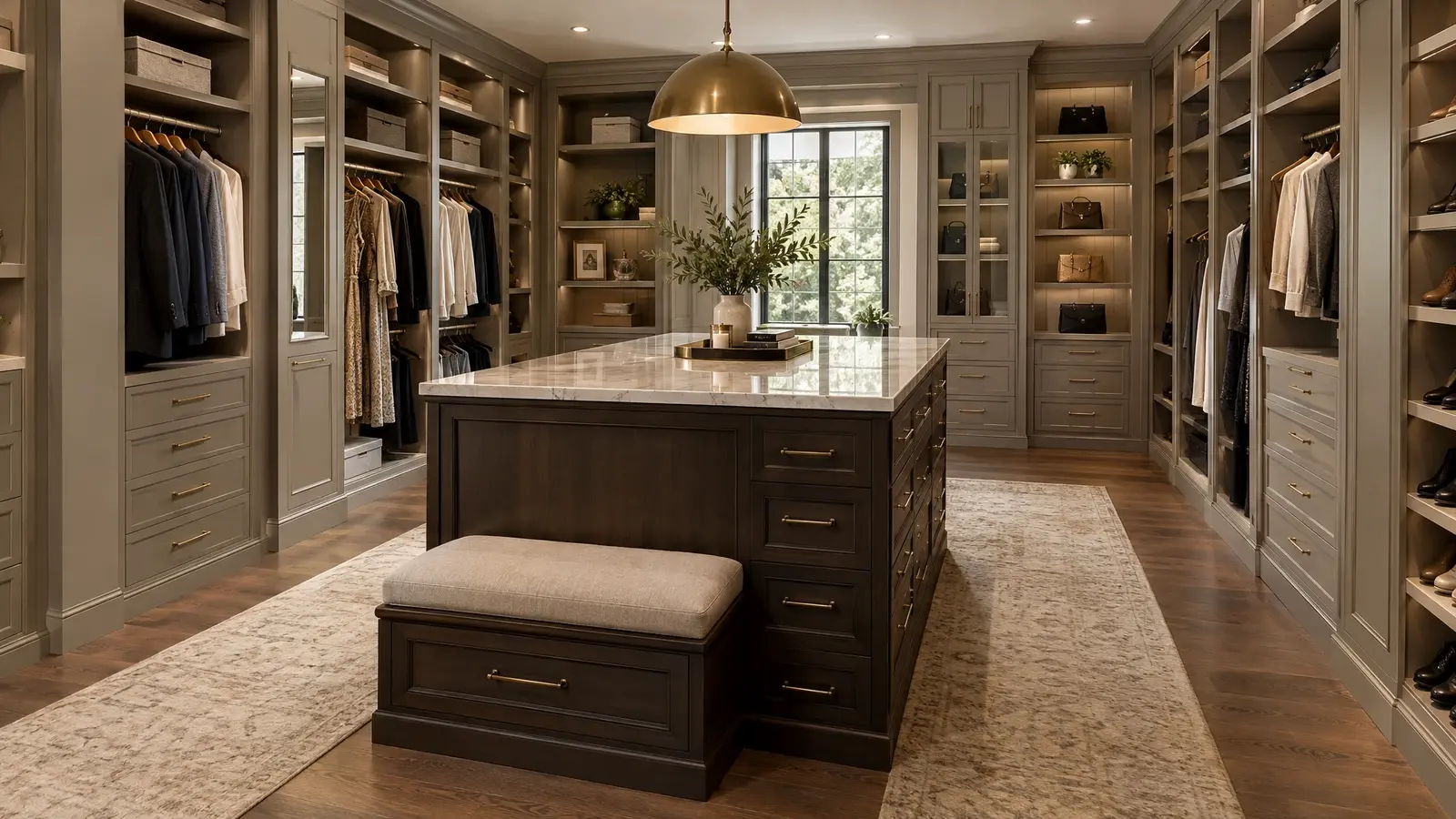
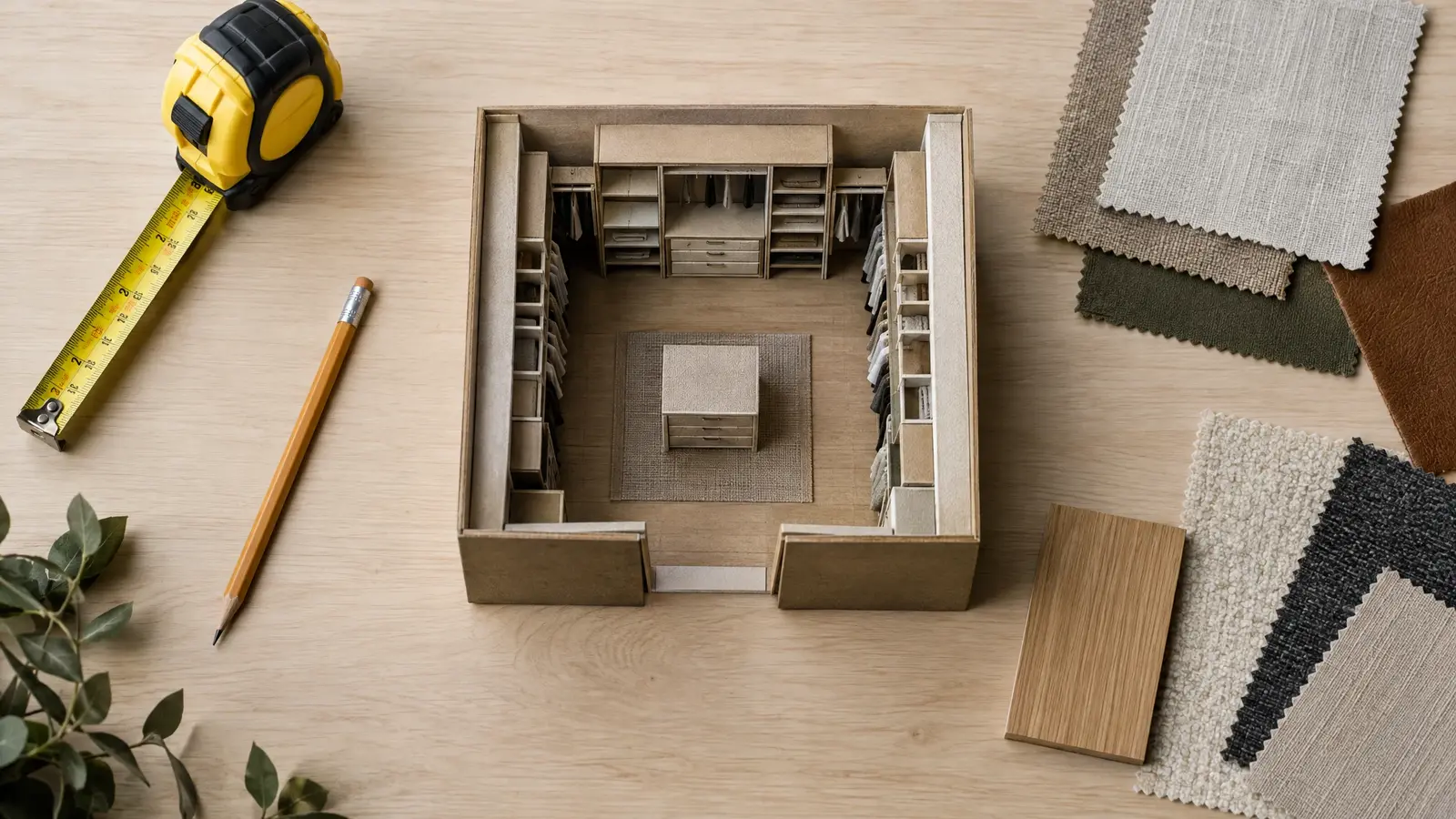
A one-wall layout can work in a space about 5 feet deep. Two facing walls (galley) need roughly 6 to 7 feet of width for cabinetry on both sides and a comfortable aisle. An L-shape suits a corner and a minimum of about 5 feet on each wall. A U-shape needs roughly 7 feet of width and gives the most storage.
Whatever the shape, plan for the aisle first. Around 36 inches is the usual minimum for one person, and 42 to 48 inches is better if two people share the space or if you add an island.
If your room is not one of these shapes, do not worry. Many walk-ins are really a hybrid: a long wall of hanging, a short wall of drawers and a corner that needs a creative solution such as a carousel or angled shelves. A good designer starts from the room you have, not from a catalog layout.
Plan hanging heights
A single rod is typically set around 66 inches high for long garments. For double hang, the upper rod sits near 80 inches and the lower near 40 inches. Long hang for dresses and robes needs 60 to 70 inches of clear drop. Adjustable rods let the closet change as your wardrobe does.
Remember the top shelf. High shelves are for seasonal items and luggage. Pull-down rods or a step stool make them usable.
Hanging height also depends on who uses the closet. A taller person may want a rod a few inches higher, and anyone with limited reach may prefer pull-down rods for the upper level. Tell your designer, because small adjustments make a daily difference.
Give drawers and shelves their job
Drawers are best at hip height, and 18 inches or more of width is useful for folded items. Shelves for folded knits are typically 12 to 16 inches deep and spaced 10 to 12 inches apart. Shoe shelves are spaced to the shoe: about 7 to 9 inches for flats and heels, more for boots.
Include a drawer or two that you will love: a lined jewelry drawer, a belt-and-tie tray or a sunglasses drawer. These small details are what make a closet feel custom.
Deep drawers (about 10 inches tall inside) suit sweaters and jeans, while shallow drawers (about 4 to 5 inches) suit underwear, scarves and accessories. Soft-close full-extension slides keep heavy drawers smooth for years, and dividers keep small items from sliding into one corner.
Light it like a boutique
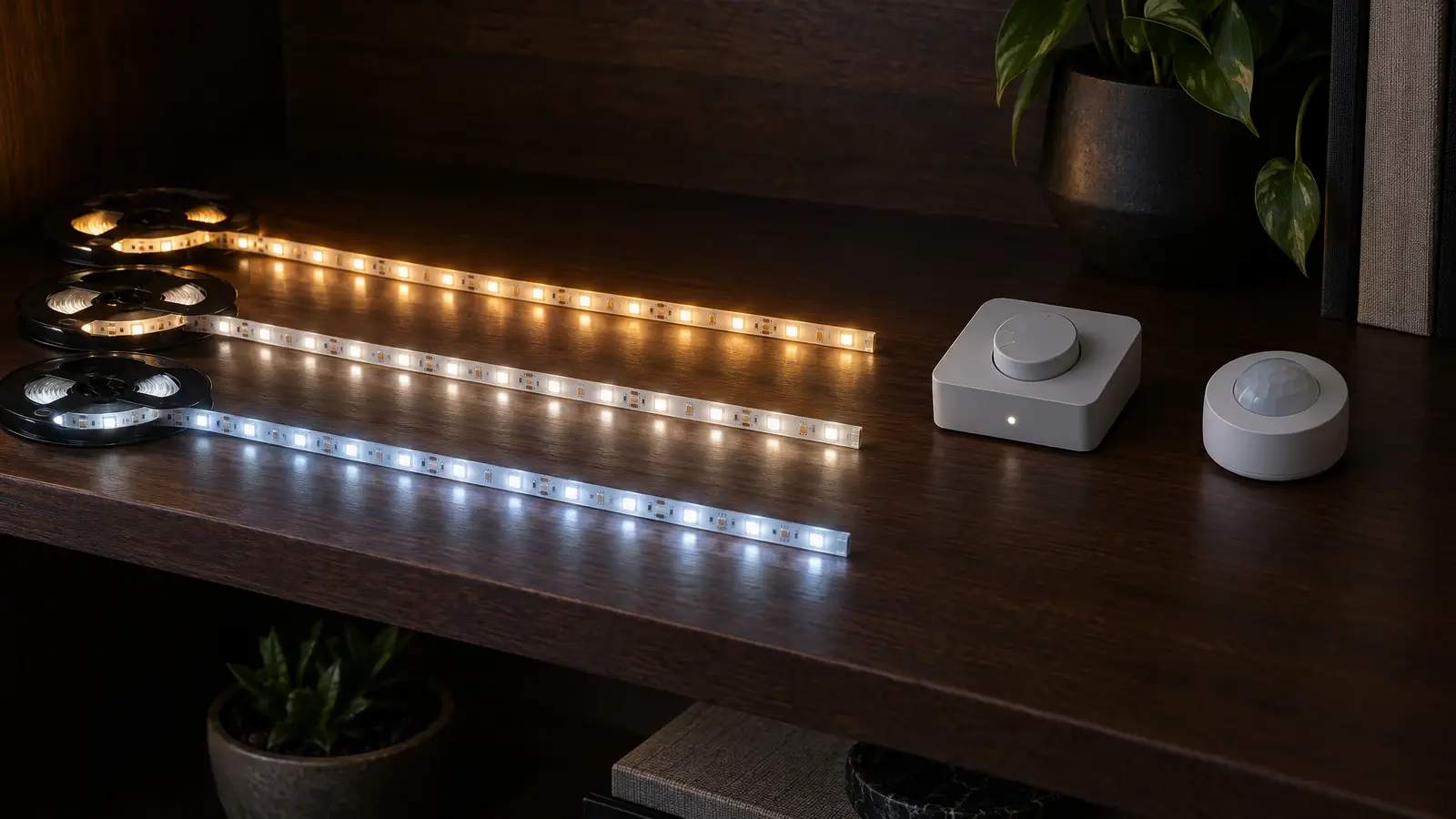
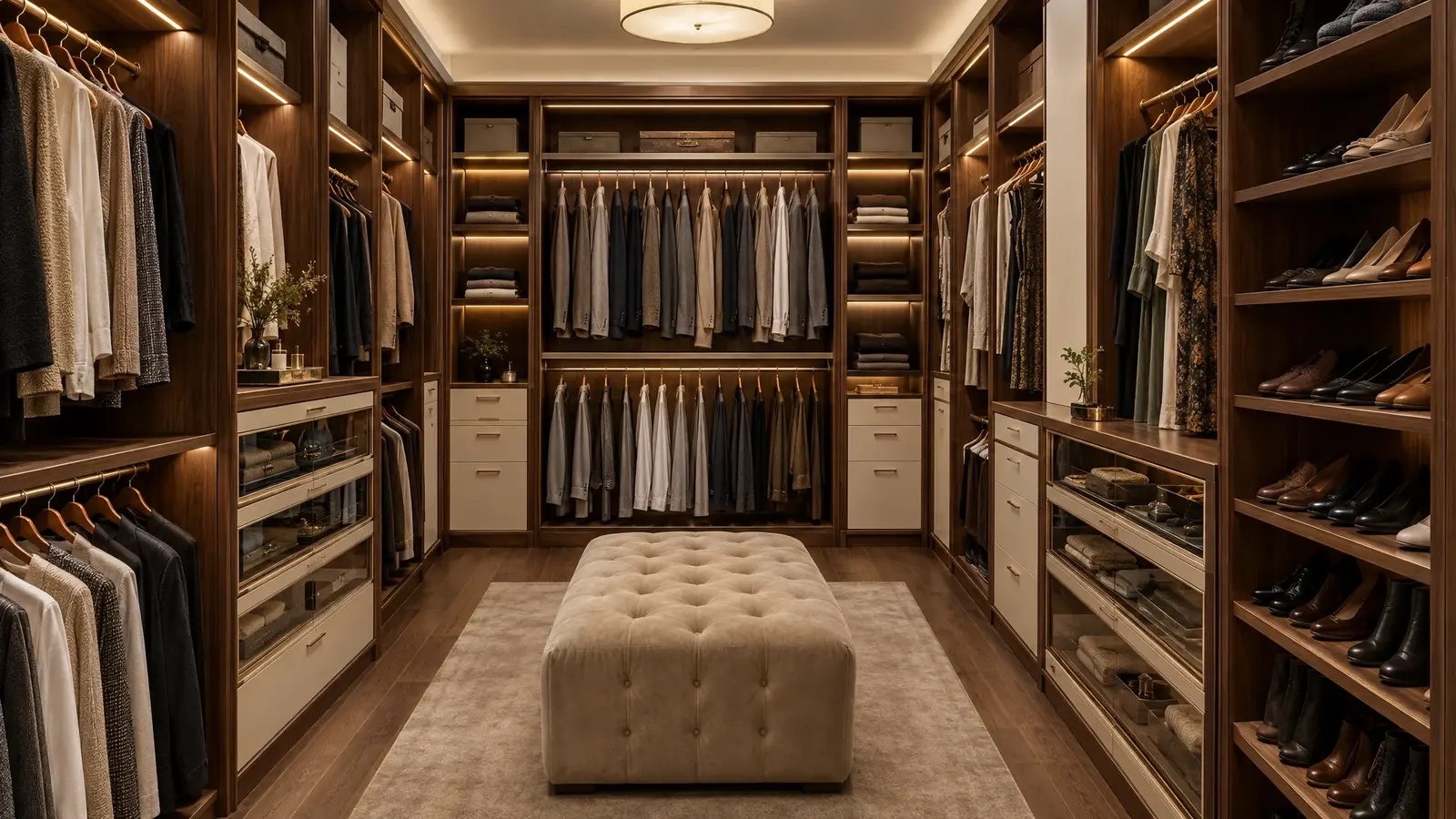
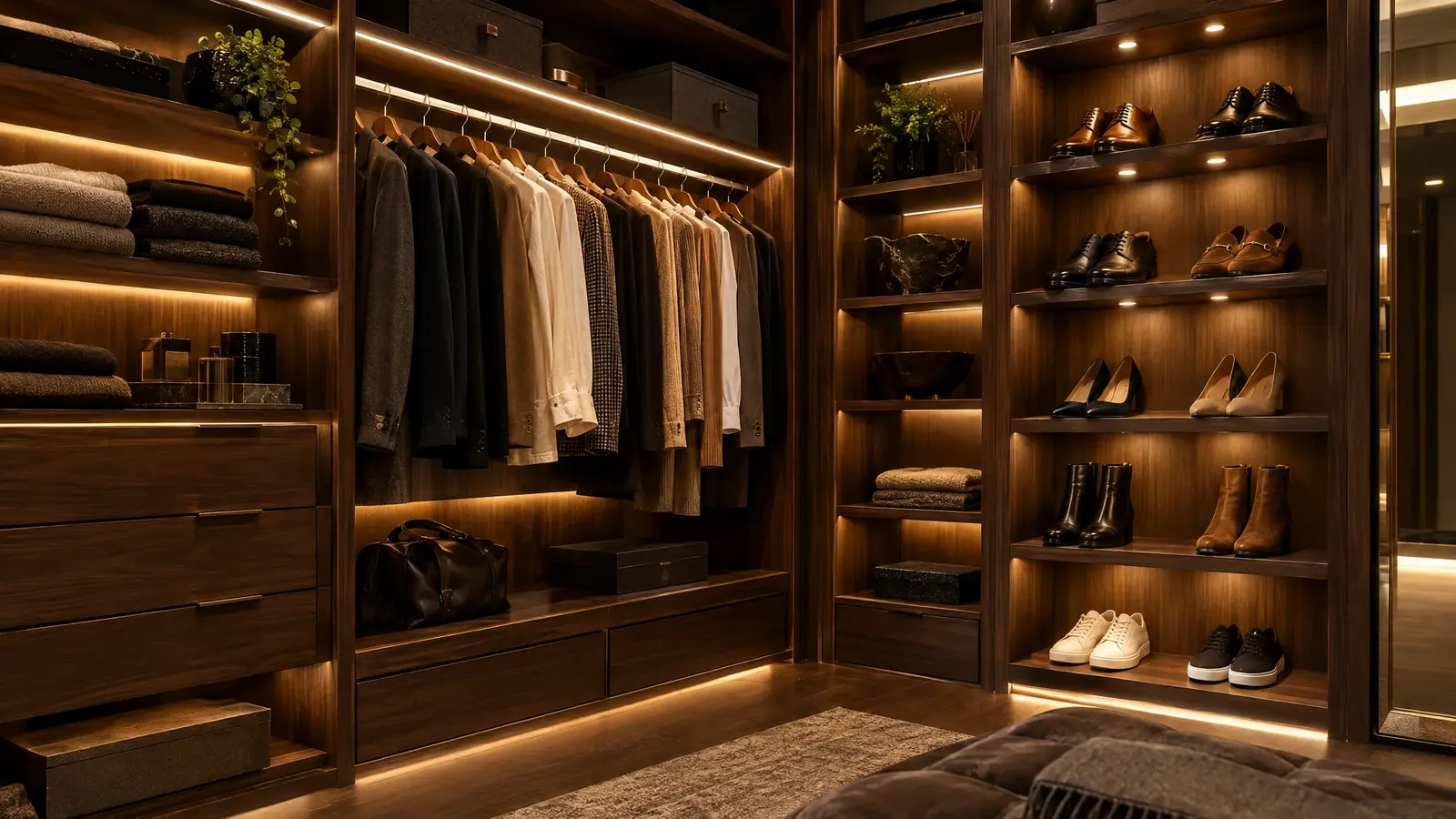
Layered lighting is the most noticeable upgrade. Use an ambient layer for the room, a task layer along rods and shelves and an accent layer for displays. Choose LEDs in a warm-neutral range with a high color rendering index so colors look true, and add motion sensors so the light is always there when you need it.
Do not forget the floor and the walls. Light-colored cabinets, a pale wall color and a reflective floor or runner bounce light around the room, so you may need fewer fixtures. Dark finishes look dramatic, but they need more light to keep the room from feeling like a cave.
Finish with the details
A bench or ottoman, a full-length mirror, a hamper, a steamer outlet and good doors turn a storage room into a dressing room. Add a plan for ventilation and for the floor: carpet, wood or tile each change how the room feels.
Finally, think about ventilation and humidity. Tennessee summers can be damp, and a closed closet benefits from airflow. A small louvered panel or a quiet vent can help protect clothing and leather goods, especially in basements and older homes.
Plan the aisle first, give every category a zone and light everything well; the rest is finish.