Design for their height
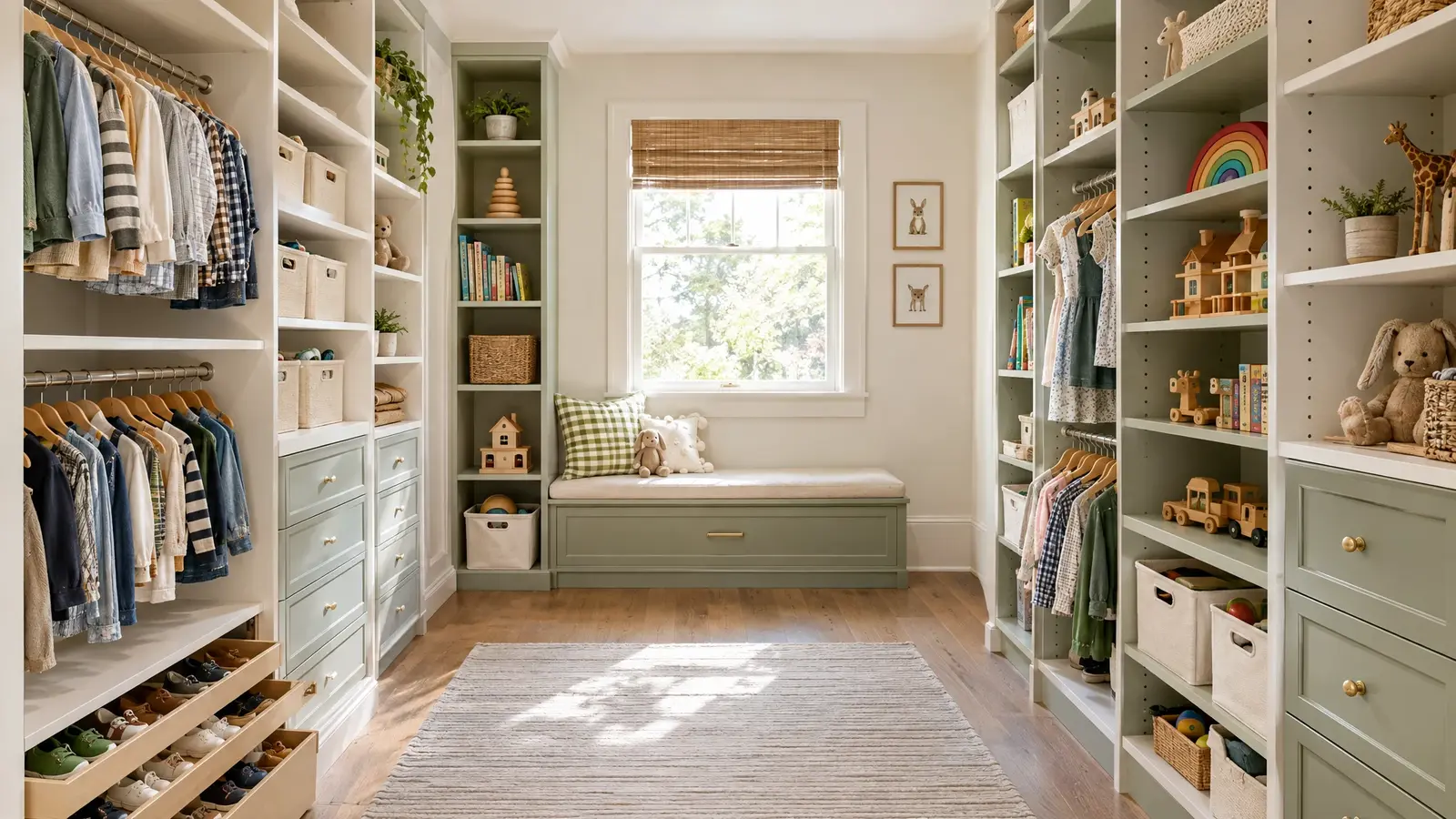
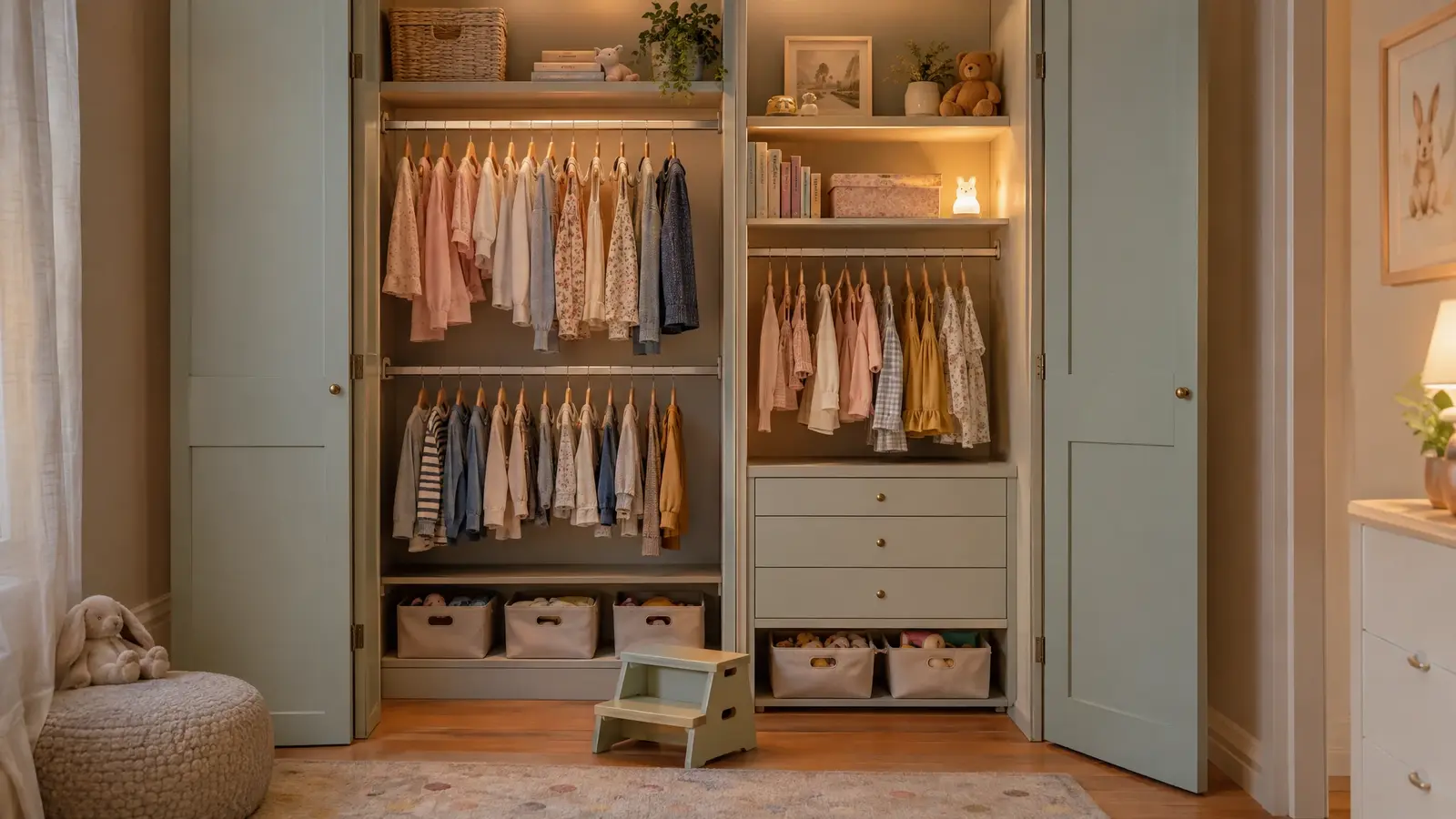
Place a low rod and shelves so children can reach their own clothes. Adjustable hardware lets you raise them as they grow.
A lower rod and a few open bins are enough for a toddler. By elementary school, a second rod above for dress clothes and a stool for the top shelf work well.
Make it easy to put away
Open bins, hooks and labeled baskets are easier than folding. Picture labels help younger kids.
Make the easy thing the right thing: if a bin is easier than a hanger, kids will use the bin. Save the hanger for the items that truly need it.
Plan for toys and gear
Deep drawers or cubbies handle toys, sports gear and books.
Give each category an obvious home. Toys with small parts can go into lidded bins on a higher shelf, and bulky sports gear belongs near the door.
Choose durable finishes
Melamine and thermofoil wipe clean and stand up to daily use.
Rounded corners and soft-close hinges and slides help protect little fingers, and the materials are easy to clean after art projects and muddy cleats.
Think ahead
Design for a teen too. Start flexible so you do not need to rebuild.
Keep a section of the closet open for flexibility. A teenager's needs are very different from a seven-year-old's, and an open section can become a desk, a hamper or a hanging area.
Let kids reach it, and let the closet change as they do.