Make the entrance count
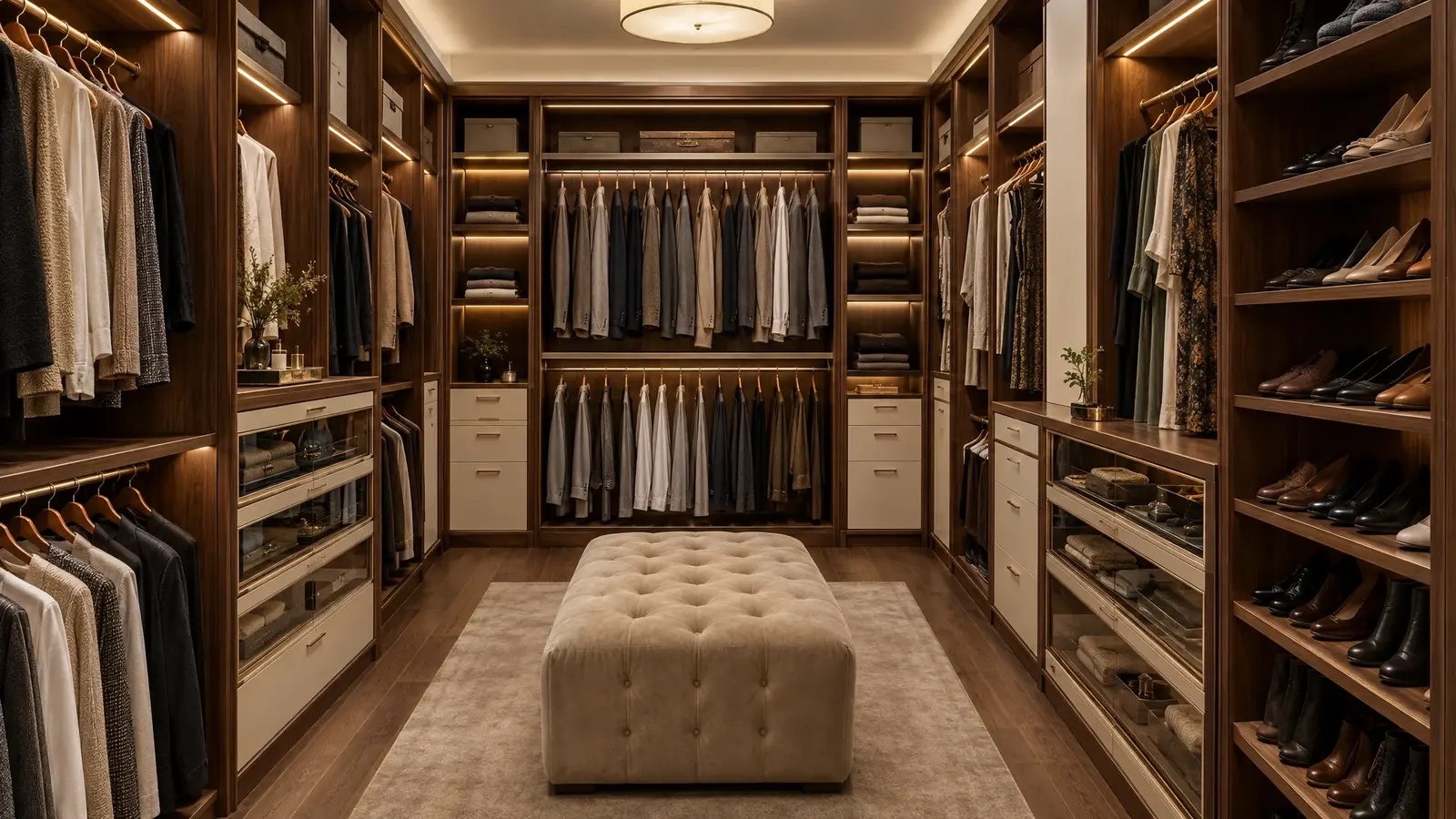
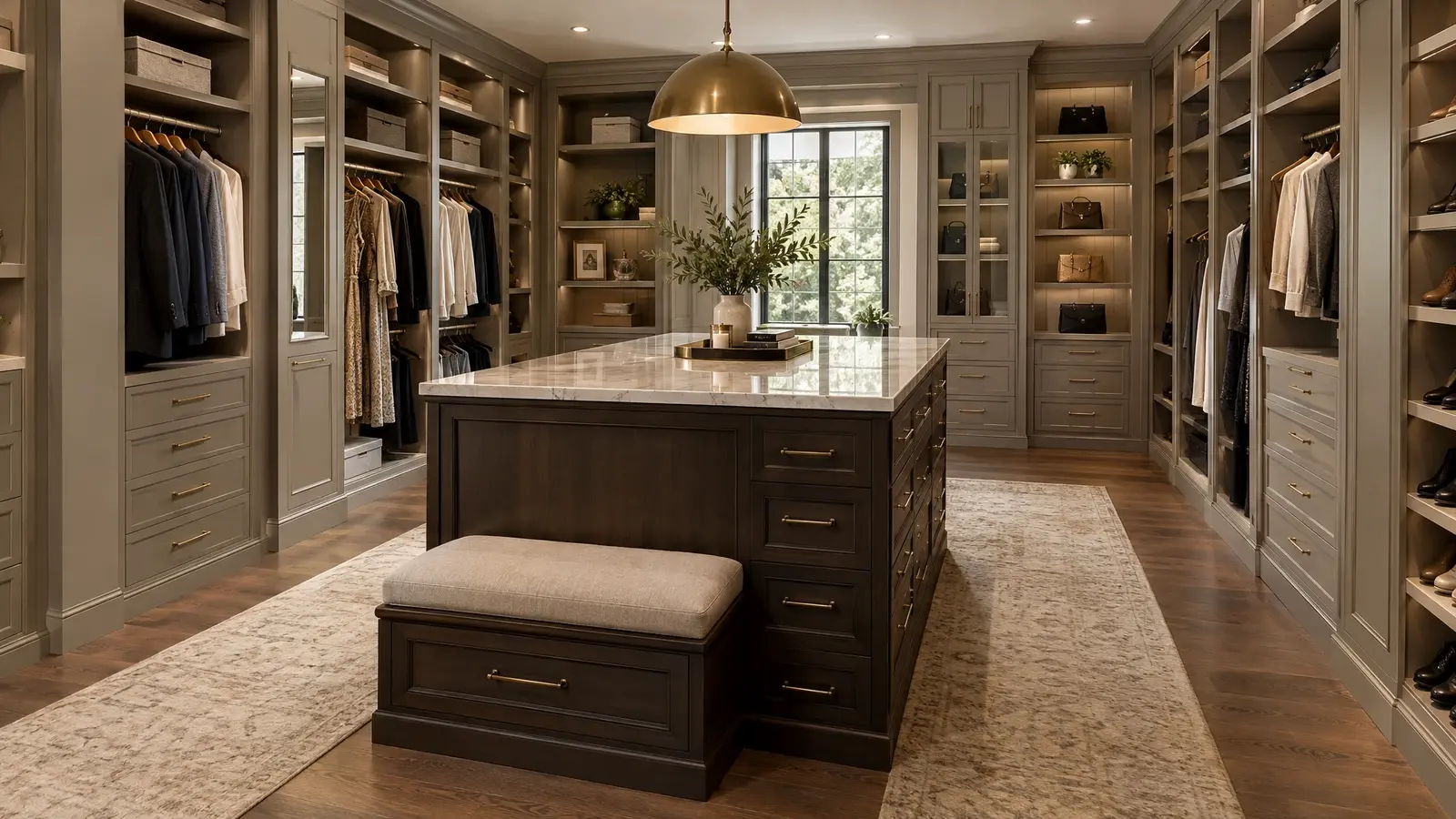
A set of glass-front cabinets or a mirrored door at the entrance gives the closet a sense of arrival. Add a runner rug and a pendant light.
A small runner rug, a pendant light and a bench just inside the door also help. They tell visitors that this is a room, not a cupboard.
Use the corners
Corners are often wasted. Corner shelves, angled rods or a carousel make them useful.
A corner can also hold a tall mirror, a hamper or a steamer station. Think of the corner as bonus space, not a problem.
Add an island or a peninsula
If the aisle allows at least 36 to 42 inches around it, an island adds drawers, a folding surface and a focal point.
If the room is too narrow for an island, a slim peninsula or a bench at the end of a run gives you a surface for folding without blocking the aisle.
Give shoes and bags a stage
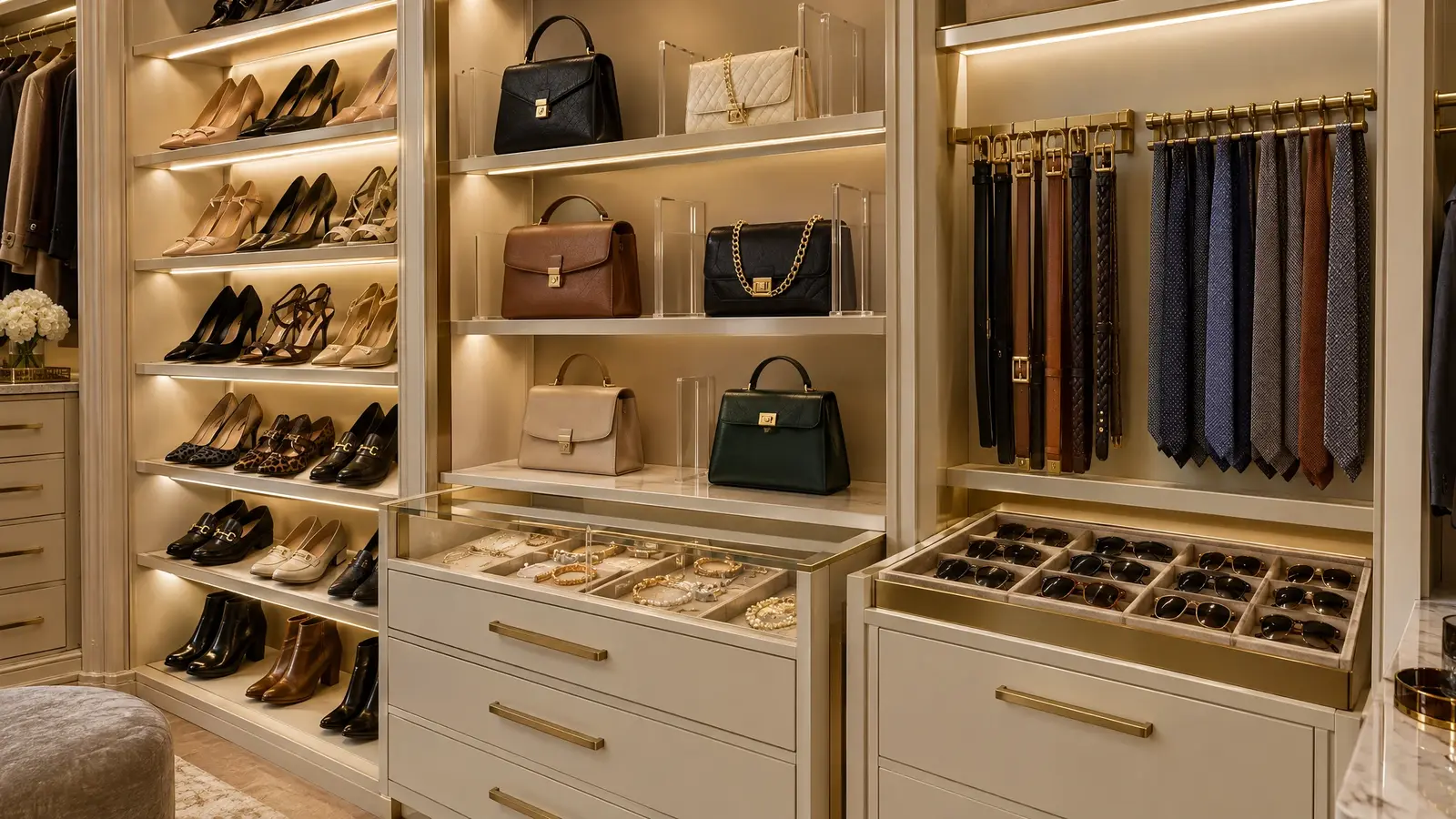
Angled shoe shelves, lit bag cubbies and glass fronts turn accessories into a display.
A small step stool in a matching finish makes the highest shelves useful, and it looks better than a kitchen chair.
Hide the practical things
A pull-out hamper, a fold-out ironing board and a steamer outlet keep chores close and out of sight.
Even a plain pull-out hamper in a lower cabinet keeps laundry from piling up on the floor and makes the room feel calmer.
Plan for the seasons
High shelves and under-bed-style drawers hold off-season clothes. A rotation habit keeps the closet calm.
Label the bins you only open twice a year. It saves you from taking down every box to find the holiday sweater.
Add a place to sit
A bench or ottoman is useful for putting on shoes and adds comfort.
If you share the closet, give each person a bench end or a drawer of their own. It keeps the peace.
Pick three ideas you will love and use every day, and design the rest around them.