Melamine: the workhorse
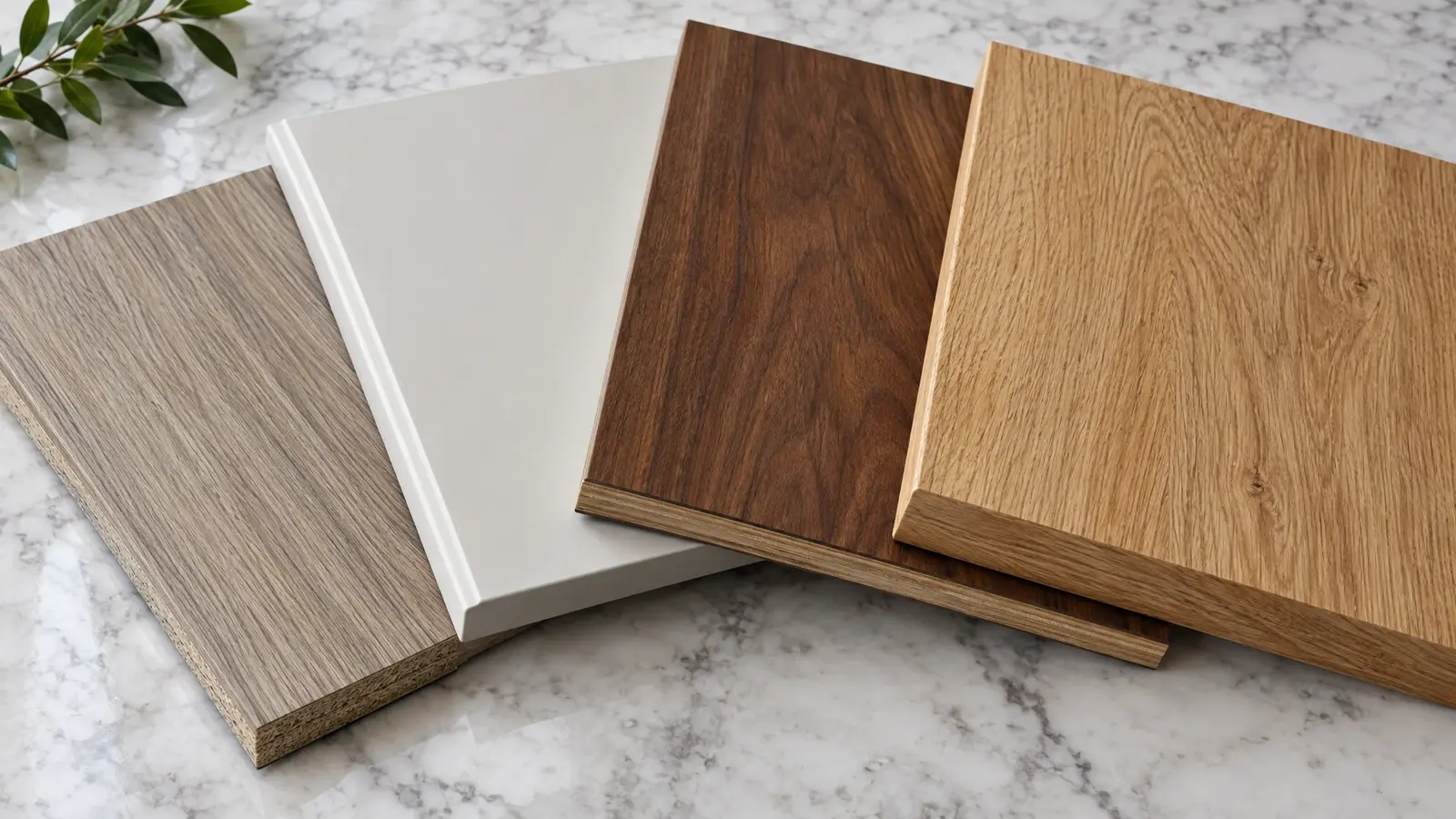
Melamine is a decorative surface fused to an engineered core. It is durable, easy to clean and available in many colors and grains. For most closets it is the best value.
Edge banding matters as much as the surface. Look for edges that are thick, well bonded and color matched, because the edges take the daily bumps. Good fabricators also seal cut edges to protect against moisture.
Thermofoil and paint: the furniture look
Thermofoil is a vinyl film formed over a routed board, giving seamless profiled fronts. Painted fronts offer custom colors and touch-up ability. Both suit transitional and traditional designs.
Painted fronts can be repainted when you change your color scheme, and small chips can be touched up. Thermofoil cannot be repainted easily, so choose a color you will enjoy for years.
Wood veneer: real grain, stable panels
Veneer is real hardwood bonded to a stable core. It gives genuine grain and warmth with less movement than solid boards. It is the choice for high-end primary closets.
Veneer is sliced in sheets, and we choose which sheets sit next to each other so the grain flows across doors and drawers. That attention to matching is what makes a veneer wall look like one piece of furniture.
Solid wood: the heirloom
Solid wood doors and dovetail drawers can last for generations and can be refinished. They cost the most and move with humidity, so good construction matters.
Solid wood moves with seasonal humidity, so we use frame and panel construction on doors. It is the same technique used in fine furniture for centuries, and it keeps solid doors flat.
Mixing materials
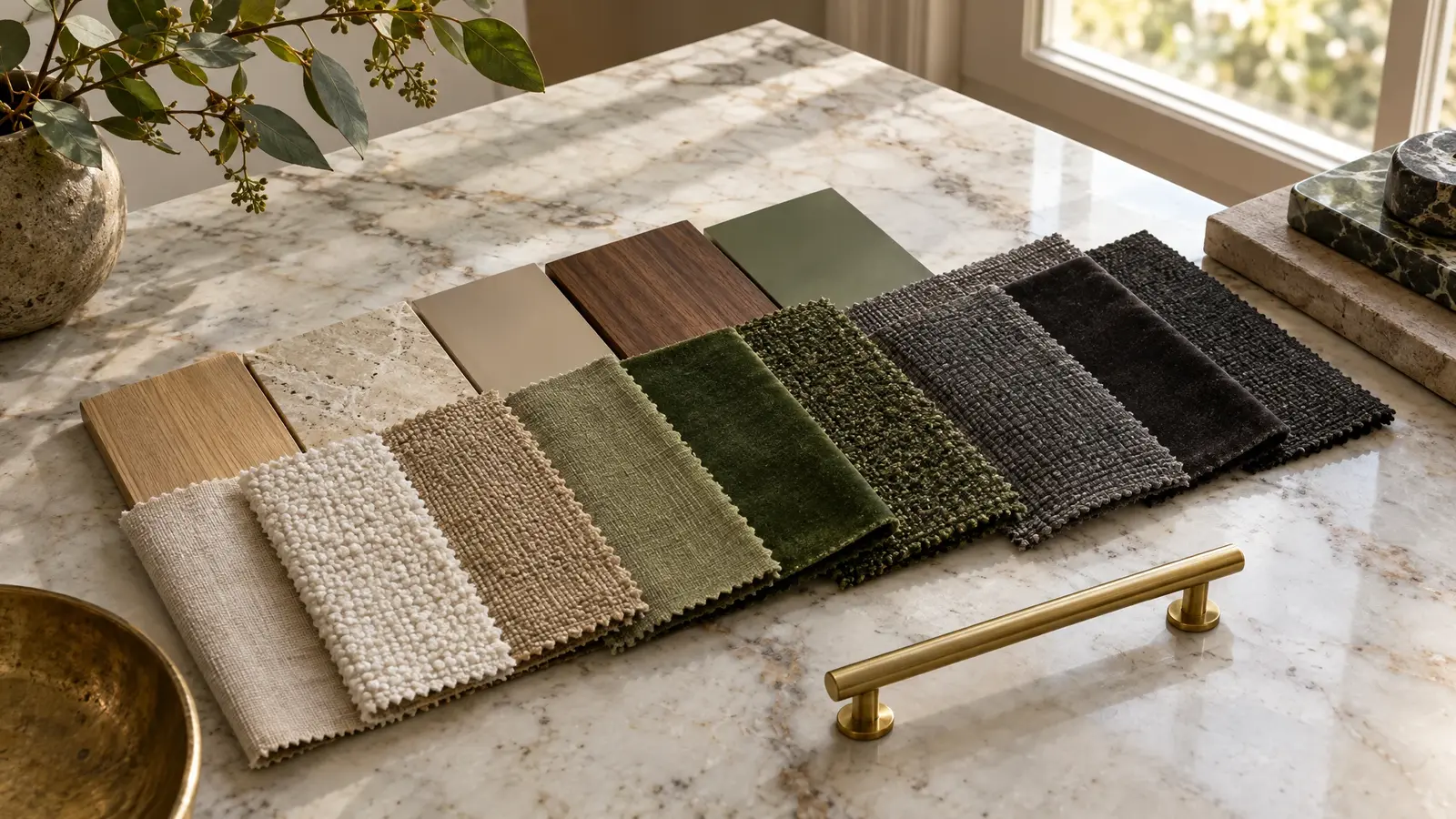
A smart approach is to combine materials: durable melamine interiors, veneer or painted fronts and a stone-topped island. You get luxury where it shows and value where it does not.
It is also worth considering where you will touch the closet most. Drawer fronts and door handles take the most wear, so many designs put the premium material there and use durable interiors elsewhere.
Care and cleaning
Wipe melamine and thermofoil with a damp cloth. Treat veneer and wood gently with a soft cloth and a mild cleaner. Avoid soaking any surface, and keep fronts away from heat.
If you have pets or small children, look for finishes that clean easily and resist scuffs. A satin sheen hides fingerprints better than a high gloss.
Put the money where hands and eyes land, and choose durable surfaces for the rest.